Speakers

Leaders and innovators from the Ruby community around the world come together at RubyWorld Conference 2026.

Keynotes

Day 1 Keynote

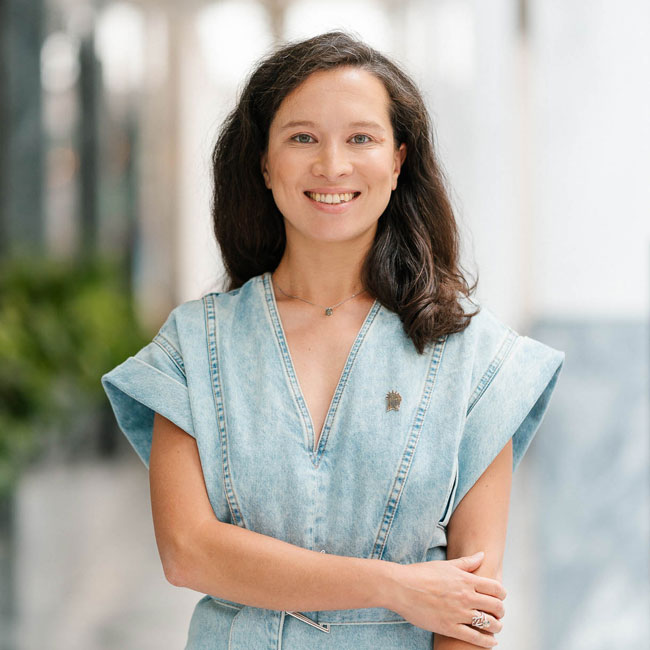
Irina Nazarova

Evil Martians / CEO

Session Title Ruby Startups Today
Abstract

Something is stirring. Quietly, a new generation of founders is choosing Ruby for their most ambitious work: not out of loyalty, but out of pragmatism. You'll meet them here: Y Combinator alumni, VC-backed teams, all asked the same questions: why Ruby, in 2026? What's great, and what's missing? Their answers live on the frontier: agentic software development, AI workflows written in Ruby, modern frontends built the Rails way, the arc from prototype to real scale. Let's hear their stories: where Ruby gives them leverage, where the ecosystem still has room to grow, and the shape of what is emerging across the cohort. Their success is Ruby's future. Let's talk about how each of us contributes: through open source, shared knowledge, and the experience we pass on. The next chapter of Ruby's story is being written right now. Let's write it together.

Day 2 Keynote

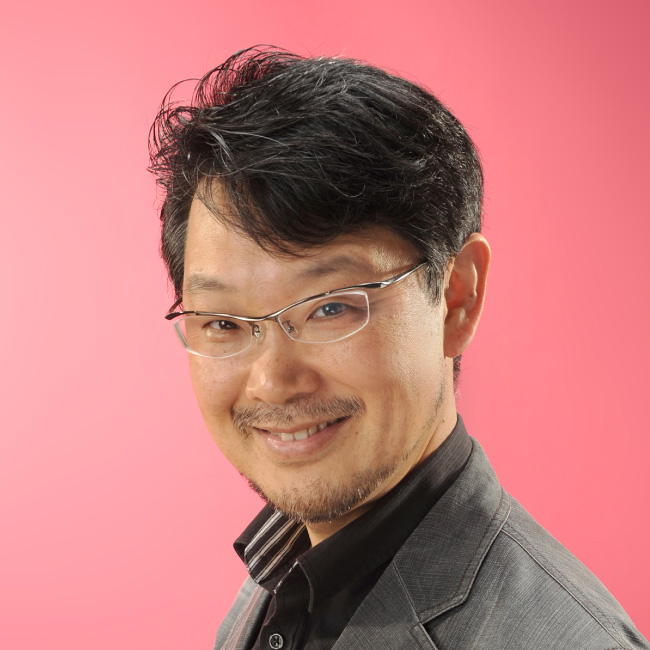
Yukihiro Matsumoto

Ruby Association / Chairman

Session Title Session title to be announced
Abstract

The abstract will be published once confirmed.

Sessions

Shun Hiraoka

ESM, Inc.

December 3, 2026 (Thursday) 14:30 - 14:45

Run Ruby Everywhere with the seL4 Microkernel

Ruby typically relies on various OS features to run. While this means it normally operates on a standard OS, we can also run Ruby on other machines by providing just the essential features through a custom kernel. In this session, I will talk about porting Ruby onto seL4, a microkernel, and how this enables running Ruby on a wide range of hardware platforms.

Kota Koyama

Hubble,Inc. / Lead Backend Engineer

December 3, 2026 (Thursday) 14:50 - 15:05

Ruby × LLM: Is It Really Improving the User Experience? — Lessons from Error Detection and Anti-Patterns

More and more products are integrating LLMs into applications built with Ruby. We implemented an AI-powered feature the way we normally would: using a transaction to ensure consistency and handling the work synchronously before transitioning to the next screen. The code passed review and all tests. Yet in production, users found themselves stuck on a loading screen, while our monitoring system fired an ActiveRecord::LockWaitTimeout alert. The code was working as designed. And yet, the user experience that AI was supposed to improve had actually gotten worse. Have you ever experienced something similar? In this session, we’ll take a single error that occurred in an AI-powered application form autofill feature and trace the journey from root cause to improvement, using before-and-after code and real-world measurements. Whether you’re planning to integrate LLMs into your application or are already dealing with the challenges, this session will provide practical insights to help you make better design decisions.

Naoyuki Sato

RIZAP TECHNOLOGIES,Inc. / Director

December 3, 2026 (Thursday) 15:40 - 16:10

Graduating from SaaS, Crossing the Sea: In-House Rails Behind 2,000 Unstaffed Gyms, and How AI Shifted the Build-vs-Buy Break-Even Point

chocoZAP runs 20,000 in-store cameras, digital signage, and a reservation system. All three started on SaaS and have since been replaced with in-house Rails systems. It all started with a lesson we learned when we relied on outsourcing. This talk shares, with real numbers, five years of bringing development in-house with a team that is half new graduates, and how the arrival of AI agents moved the break-even point of Build vs. Buy. We will also explain why we keep choosing Ruby in the AI era, and how our in-house platform has begun crossing the sea to Hong Kong and Taiwan.

Asfur Georgy

Evil Martians / Software Engineer

December 3, 2026 (Thursday) 16:15 - 16:45

Circuit Breakers for Ruby in the AI Era

This talk explores cascading failures, where delays in third-party APIs exhaust application resources and bring down unrelated parts of a system. It covers the basics of the circuit breaker pattern, its implementation in Ruby, production use with Redis, and the design and internals of the open-source circuit breaker gem Stoplight. It also explores how Lua scripts can improve performance by eliminating bottlenecks caused by Redis round trips.

Koichi Ito

ESM, Inc. / Engineering Manager

December 4, 2026 (Friday) 11:30 - 11:45

Fine-Tuning LLMs with Ruby

Technologies for building LLM applications, such as RAG and MCP, are gradually gaining traction in the Ruby ecosystem. But what about fine-tuning, which adapts the LLM itself to specific requirements? While RAG provides a model with relevant external context at inference time, fine-tuning adapts the model's parameters to shape its behavior for a particular task. Fine-tuning is typically done in Python, with its mature machine learning ecosystem, but it can also be used from Ruby. This talk introduces the fundamentals of fine-tuning and shows how to work with it using Ruby, focusing on LoRA (Low-Rank Adaptation), a parameter-efficient fine-tuning technique. While the underlying machine learning backend is implemented in Python, Ruby code through PyCall provides a practical way to understand how fine-tuning works. The talk also explores how fine-tuning is used with local LLMs and shares the current state of the Ruby ecosystem around AI.

Hiroshi Shibata

ANDPAD, Inc. / Fellow

December 4, 2026 (Friday) 11:50 - 12:05

Ruby on Windows

Windows is the standard environment for companies, local governments and schools in Japan. Yet because setting it up is hard, many organizations have left Ruby out of their technology choices. This talk introduces a new way to install prebuilt Ruby with a single command, requiring neither administrator privileges nor an installer. I will also cover how we prepared a distribution that can pass a corporate security review. Ruby you can use with confidence on Windows lets AI agents take on more of the work, and raises the productivity of engineers regardless of the environment they work in.

Hitoshi Hasumi

ANDPAD Inc.

December 4, 2026 (Friday) 13:05 - 13:20

REST Rebooted: What Funicular on Rails Carries

Funicular lets you write the frontend of a Rails application in native Ruby. At its core, the Object-REST Mapper maps Rails resources onto Ruby objects that live in the browser. This talk revisits Roy Fielding's REST constraints one by one and shows that the code a Rails developer already writes satisfies each of them. Along the way it reveals the true face of the forgotten constraint, Code on Demand, and explains why Rails and REST have set out on a new journey together.

Jumpei Ito

SmartHR, Inc

December 4, 2026 (Friday) 13:25 - 13:40

Bringing Ruby Camp DXRuby games to the browser: Rebuilding the game execution environment with PicoRuby.wasm

A game my teammates and I built with DXRuby at "Ruby Camp" in Shimane required a DirectX environment, so it was not something anyone could easily play. In this talk, I will share how I brought the game back to life so that it runs entirely in the browser using PicoRuby.wasm. I will discuss the challenges I faced while developing PicoDX, a DXRuby-like library I built for the port, as well as what I was and was not able to achieve. A live demo running in the browser will be shown at the venue.

Toshiaki Koshiba

CARTA HOLDINGS Inc. / Staff Engineer

December 4, 2026 (Friday) 13:45 - 14:00

The Story of My Solo Hobby Project Bringing AI, MCUs, PCs, Smartphones, and Smartwatches Together through the Super-Kawaii AI Desktop Robot Stack-chan PicoRuby Edition

Since this spring, I have been developing a solo hobby project: a PicoRuby edition of "Super kawaii AI desktop robot" Stack-chan. I fully adopted PicoRuby across the entire stack, from the robot firmware and AI control to communication protocols and controller apps for Mac, iPhone, and Apple Watch, achieving seamless multi-device coordination. In this talk, I will share the technologies and communities that made this wide-ranging hobby project possible. I will present this journey as an example of a development style that scales effectively, even as a solo developer.

Sampo Kuokkanen

Evil Martians / Executive Officer

December 4, 2026 (Friday) 14:05 - 14:20

From RubyWorld to Ruby PR: Fixing defined? and Giving Back

At RubyWorld Conference, Matz told us to go out and send pull requests to Ruby. So I tried. I started small, writing tests for MRI and ruby/spec. While working on defined?, I found a bug in Ruby itself, and ended up fixing it. I'll show how I found the bug, how I tracked it down, and what it took to get the fix into Ruby. I'll also talk about getting started with open source, and how talking about your contributions keeps you going. Maybe even far enough to start a local meetup.

Fujihara, Katsutoshi

MEDLEY, INC.

December 4, 2026 (Friday) 14:25 - 14:55

An mruby/c Programming Environment for Multiple Microcontroller Platforms and Its Educational Applications: From Block-Based Programming to Text-Based Coding, and from Browsers to Local Code Editors

This presentation introduces an mruby/c programming environment for multiple microcontroller platforms that allows learners to progress step by step from block-based programming to text-based coding in Ruby, and from browser-based programming to development using a local code editor. We explain the roles of the individual tools that make up the environment, how they interact with one another, and how they are implemented. We also report on its use in regional robot contests and school education, support for the transition to text-based coding, and educational activities conducted in collaboration with the local Ruby community. The presentation includes live demonstrations of the environment.

Ko-ichiro Sugiyama

National Institute of Technology, Matsue College / Professor

December 4, 2026 (Friday) 14:25 - 14:55

An mruby/c Programming Environment for Multiple Microcontroller Platforms and Its Educational Applications: From Block-Based Programming to Text-Based Coding, and from Browsers to Local Code Editors

This presentation introduces an mruby/c programming environment for multiple microcontroller platforms that allows learners to progress step by step from block-based programming to text-based coding in Ruby, and from browser-based programming to development using a local code editor. We explain the roles of the individual tools that make up the environment, how they interact with one another, and how they are implemented. We also report on its use in regional robot contests and school education, support for the transition to text-based coding, and educational activities conducted in collaboration with the local Ruby community. The presentation includes live demonstrations of the environment.

Miyuki Koshiba

SmartBank, Inc.

December 4, 2026 (Friday) 15:30 - 15:45

From "Fun" to Beyond: The Art of Workshop Design

Workshops offer a supportive environment to take that daunting first step. Having hosted Ruby creative coding and PicoRuby workshops ranging from 30 minutes to 4 hours, I believe the goal in a limited timeframe is not complete mastery, but a sense of achievement: "I did it!" and "That was fun!" This session covers key goal-setting principles, criteria for streamlining content, and versatile structural frameworks adaptable to any timeframe. Real-world examples of corporate participation in workshops will also be presented.

Yuki Torii

Waffle, a nonprofit organization / Everyleaf Corporation / Curriculum Manager / Fellow

December 4, 2026 (Friday) 15:50 - 16:20

How Are Teens Living with AI? — Notes from a Ruby Programming Contest for Young Coders

Now that generative AI has become part of everyday life, how are middle and high school students bringing it into their programming? In this talk, I will present data on AI usage gathered through the Ruby Programming Contest for Middle and High School Students. I will also share how Waffle, a nonprofit working to close the gender gap in tech, has positioned and incorporated AI into its programs, and how participants have responded. Drawing on both data and voices from the field, I will explore how young people learn programming in the age of AI, and what adults can do to support them.